
Kathleen Kennedy’s Lucasfilm Legacy
On January 15, 2026, Lucasfilm announced that Kathleen Kennedy has stepped down as president of the company, a role she has held since 2012. Like other major studios at Disney, Lucasfilm will now be led by a pair of top executives. Dave Filoni, who recently celebrated twenty years at the company and became Chief Creative Officer in 2023, has been elevated to the title of President. Lynwen Brennan, who first joined ILM in 1999, is Co-President while retaining the oversight of Lucasfilm’s business units and operations that she has been managing since her promotion from executive vice president in 2024.
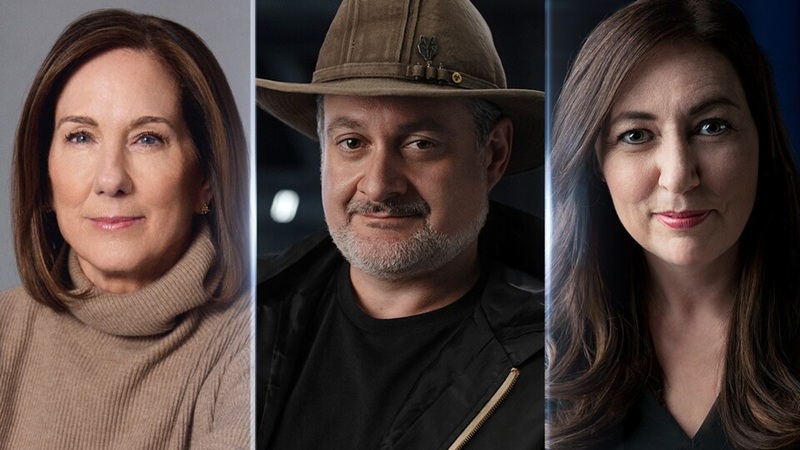
As we have discussed at FANgirl Blog and on the Hyperspace Theories podcast, Kennedy’s tenure unfortunately suffered from substantial struggles with the franchise management responsibilities that are crucial at a company like Lucasfilm. The Sequel Trilogy films lost half of their box office returns in only four years – the same years in which the Marvel Cinematic Universe was increasing its box office during the culmination of the Infinity Saga films leading to Infinity War and Endgame. The “Star Wars Story” film Solo became the first Star Wars film to lose money at the box office. Launched with great fanfare, the new Star Wars lands in the Disney Parks have not lived up to expectations: Galaxy’s Edge at Disneyland is already pivoting away from the Sequel Trilogy, Disney World’s Galactic Starcruiser unceremoniously closed after a year, and plans for Star Wars expansions in international parks were cancelled. Sales of Star Wars merchandise have collapsed, and would be hopelessly grim if not for the boon of Baby Yoda and related products from The Mandalorian. Star Wars publishing is likewise substantially underperforming, with The High Republic initiative unable to sustain widespread interest. Within the storytelling itself, Lucasfilm’s attempt to reboot into a new, different single continuity across all story media quickly and predictably deteriorated into the same struggles with consistency, coordination, and hierarchy that the prior Expanded Universe era had experienced.
Kathleen Kennedy is undeniably one of the most successful movie producers of all time, with a storied career spanning iconic pop culture phenomena of the 1980s to Oscar-winning cinematic masterpieces. The praise she has earned for these accomplishments over the decades, highlighted by the career-achievement awards she has regularly received in recent years, is well deserved and rightfully celebrated.
But the skill set of an expert movie producer is not the same as that of a development executive or franchise leader. In her Deadline exit interview, Kennedy conceded as much: “I never envisioned that I would ever be an executive … But my love is making movies. I just love making things.” Her time at Lucasfilm includes record-breaking successes and highly praised stories such as The Force Awakens, The Mandalorian, Star Wars Rebels, The Bad Batch, and Andor. But she also is responsible for a number of major failures, including The Rise of Skywalker, Solo, Willow, Indiana Jones and the Dial of Destiny, and The Acolyte. Despite her prior track record as a producer, some of her Lucasfilm projects endured substantial production troubles, particularly extensive reshoots on Rogue One and Solo, a ballooning budget on The Rise of Skywalker, and over-budget under-performing releases like Willow and Dial of Destiny. On the development side, Kennedy proved a poor judge of talent: putting her trust in men like Gareth Edwards, Josh Trank, Colin Trevorrow, Jon Kasdan, and Ron Howard while parting ways with creators like Phil Lord & Chris Miller, Ava DuVernay, Patty Jenkins, and Donald Glover. Industry reporting indicates that Kennedy took meetings, and made some preliminary development deals, with a range of diverse talent – but only white men are credited as directors and screenwriters for her seven Star Wars films (including the upcoming The Mandalorian & Grogu and Starfighter) and served as showrunners for six of her seven Disney+ series (with the lone exception of Leslye Headland’s The Acolyte). Under Kennedy’s leadership, five Star Wars movies were plagued by unsuccessful storytelling decisions, particularly in The Last Jedi and The Rise of Skywalker, and multiple live-action projects suffered interference with the storytelling judgment of the individuals who should have been trusted to lead them. Ultimately, this reflects that top-level decision-makers at Lucasfilm not only listened to or hired the wrong people to advise on what should be done, but also ignored the people with the right knowledge and experience to advise on what should not be done, for the most important franchise storytelling decisions.
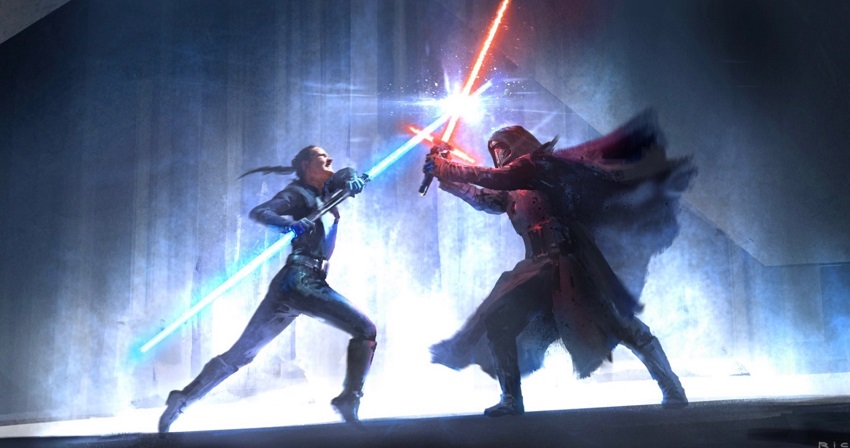
At times, Star Wars certainly did face challenges created by Disney and CEO Bob Iger, but the buck stops with Lucasfilm’s president in how the company and franchise responded. After the acquisition of Lucasfilm, Disney demanded a more aggressive timetable for the release of the Sequel Trilogy films than Kennedy would have preferred; in retrospect an error that Iger acknowledged in his recent memoir. But even if the development pace for Episode VII was rushed, a Lucasfilm with a plan and a willingness to draw upon (rather than repudiate) source material had plenty of time for readily manageable development processes for Episodes VIII and IX. Similarly, Iger and Bob Chapek pressured Kennedy to unveil an unrealistic, and ultimately unfulfilled, slate of projects at the 2020 investor day for the then-new Disney+ streaming service, a situation also experienced by the MCU’s Kevin Feige. Concurrently, Iger hit pause on new Star Wars films after the troubles of the Sequel Trilogy – but the inability to get another movie into production and into theaters for nearly seven years falls on Kennedy, in contrast to Feige’s handling of the comparable output reduction for the MCU. Although not mandated from the top of the Disney corporation, Walt Disney Imagineering shares the blame with Lucasfilm for overly ambitious plans and ill-advised franchise decisions for Galaxy’s Edge and the Galactic Starcruiser.
Perhaps the most fundamental error of the Kennedy era at Lucasfilm was her decision to end, rather than continue, the saga of the Skywalker family. It is true that Star Wars is a big galaxy, one with room for a vast variety of stories and characters, and that some fans do prefer Star Wars stories that aren’t about the Skywalkers. As we have discussed on the blog and podcast for many years, however, the evidence from decades of the franchise clearly indicates that for the great majority of fans, especially the more casual audience, the Star Wars brand is primarily about the Skywalkers. Exceptions can be found, of course, like several top-selling videogames. But nothing in the past of the franchise would have suggested that abruptly killing off the entire Skywalker family would be a good decision for the future of Star Wars. And no one but Kennedy herself bears responsibility for the company committing to that storytelling decision.
The coverage of Kennedy’s retirement from Lucasfilm in the Hollywood trade publications confirms the industry assessment of her legacy as a mixed record of highs and lows. Matt Belloni at Puck, who reliably reported on the corporate turbulence during her final years at Lucasfilm, aptly encapsulated the point: “But with this type of executive, you ask whether the franchise she inherited is in a better or worse place today than when she got the job. After five movies and 14 years, Star Wars must essentially start over as a film franchise. That’s not where you want to be.”
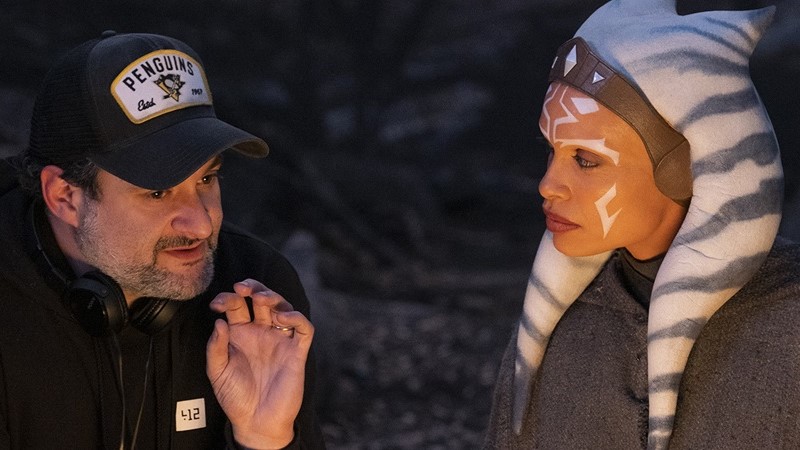
Dave Filoni’s role as President of the company, now truly unimpeded within Lucasfilm in his decisions as Chief Creative Officer, essentially coincides with the start of the new calendar year. Although this moment is more of a rebuilding effort, if not fresh start, than should have been necessary for the franchise, we have many reasons for optimism about the direction Star Wars will take under Filoni’s leadership. In addition to our longstanding coverage of The Clone Wars, Star Wars Weekends, Star Wars Rebels, and other Filoni appearances, in recent years we have explored on the blog and podcast his increasingly public descriptions of his perspective on Star Wars. He understands the core values of Star Wars and the importance of honoring George Lucas’ guiding principles and legacy characters, while also striving to move the franchise forward into fresh stories and younger generations of storytellers. Filoni is willing to acknowledge mistakes, unsuccessful decisions, and elements that didn’t land with fans the way the storytellers had hoped. Following the example of Lucas for him, Filoni is committed to mentoring other Star Wars creatives, passing on what he has learned to help keep the franchise rooted in its strongest foundations. We are excited to find out what Dave Filoni has planned next for Star Wars.
Media Coverage Links:
- Lucasfilm and the Walt Disney Studios Announce Leadership Transition (StarWars.com; Jan. 15, 2026)
- Lucasfilm Replacing Kathleen Kennedy With Dave Filoni, Lynwen Brennan as New ‘Star Wars’ Bosses (Brett Lang, Variety; Jan. 15, 2026)
- Star Wars Shake-Up: Kathleen Kennedy Steps Down as George Lucas Protégé Dave Filoni, Exec Lynwen Brennan Take Over Lucasfilm (Aaron Couch & Borys Kit, The Hollywood Reporter; Jan. 15, 2026)
- A Shift In The Force For Lucasfilm’s Kathleen Kennedy: The Exit Interview (Mike Fleming Jr., Deadline; Jan. 15, 2026)
- Kathleen Kennedy’s Final Episode (Matthew Belloni, Puck; Jan. 16, 2026)
- Kathleen Kennedy’s Lucasfilm Legacy: A Galaxy in Disarray | Analysis (Drew Taylor, The Wrap; Jan. 16, 2026)
- Star Wars Has New Hope (and Some Growing Pains) in Its Future (Richard Newby, The Hollywood Reporter; Jan. 16, 2026)
FANgirl Blog Links
Star Wars Franchise Management:
- Star Wars Celebration Japan 2025: Perspective and Takeaways (May 2025)
- Hyperspace Theories: The Curious Case of Kathleen Kennedy’s Retirement (Mar. 2025)
- Ten Years of Hyperspace Theories (Oct. 2024)
- Lessons in Franchise Management – MCU: The Reign of Marvel Studios (Jan. 2024)
- Hyperspace Theories: Starting 2024 with the Future of Star Wars (Jan. 2024)
- The Stories Told By White Men Rise to the Top at the Lucasfilm Showcase: Star Wars Celebration Anaheim 2022 (June 2022)
- The Failures of The Rise of Skywalker, Part 6 (Jan. 2020)
- Comparing Two Fresh Starts: Captain Marvel and Star Wars (July 2019)
- Star Wars Celebration 2019: The Franchise Talking Points (May 2019)
- We’ve Been Here Before: Parallels in the Public Narrative on the State of Star Wars (June 2018)
- Rey At Risk Revisited: The Danger Signs From The Last Jedi (Feb. 2018)
- Skywalker At Risk: Serial Storytelling and Brand Value (Feb. 2018)
- Resurrecting Legends: Is the Star Wars Reboot Gendered? (Feb. 2017)
Dave Filoni’s Leadership Vision:
- Star Wars Celebration Japan 2025: Ahsoka (May 2025)
- Star Wars Celebration Japan 2025: Lucasfilm Animation’s 20th Anniversary (May 2025)
- Dave Filoni Talks Writing AHSOKA and Guiding the Future of Star Wars Storytelling (June 2024)
- Now Filoni is the Master (Nov. 2023)
- Star Wars Celebration Europe 2023: The Women of Ahsoka (Apr. 2023)
- Lucasfilm’s Evolving Leadership (Sep. 2021)

B.J. has served as editor of FANgirl Blog from its inception, as well as contributing reviews and posts on a range of topics. He edited Tricia’s novel Wynde, and is collaborating with her on several future projects set in that original universe.
Currently a tenured law professor in Florida, B.J. has been a practicing lawyer in Washington, D.C., a law clerk to a federal appeals court judge, and a law journal editor-in-chief. He is also a proud geek dad whose son who is a big fan of Star Wars and The Clone Wars.
- Star Wars at D23 2026 - August 19, 2026
- Join a Mission with Mando and Grogu on Millennium Falcon Smuggler’s Run - May 29, 2026
- May the Fourth at Disney World 2026 - May 6, 2026


